The Agentic Clipping Tool: How AI Agents Will Create Video Content

Vugola Team
Founder, Vugola AI · @VadimStrizheus
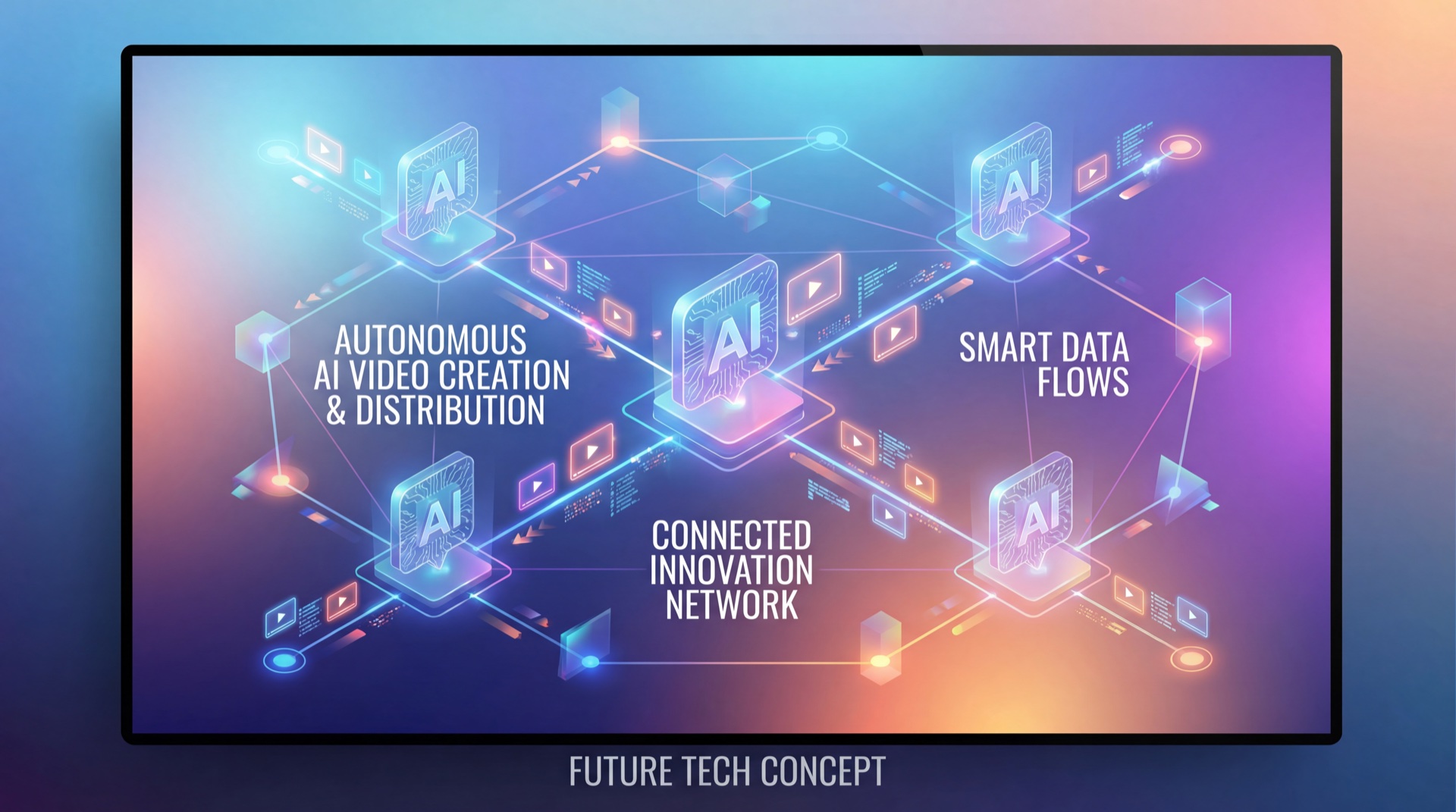
An agentic clipping tool is a video clipping platform designed to be operated by AI agents through APIs — agents submit videos, receive structured clip data, apply captions, and schedule posts without human intervention, and Vugola is building the first platform purpose-built for this future. I'm building Vugola to be the tool that AI agents reach for when they need to clip a video. Not humans clicking buttons — agents making API calls. Here's why that matters and how it works.
There's a shift happening in how software gets used. For 30 years, we built tools for humans. Click this button, drag this slider, fill out this form. The entire interface paradigm assumed a human was on the other end. That assumption is breaking down.
AI agents — autonomous systems that make decisions and take actions — are becoming the primary operators of software tools. Not assistants to humans. Operators. They don't need pretty interfaces. They need structured APIs, predictable responses, and reliable execution. The tools that adapt to this new operator will thrive. The ones that don't will become legacy software within five years.
The future of video creation is one of the first industries where this shift will be obvious. AI agents video content pipelines — clip, caption, schedule, analyze — are repetitive, rule-based, and data-driven. It's exactly the kind of workflow agents are built to automate into an automated content pipeline. And right now, no major clipping tool is designed for agent operation.
I'm changing that. Here's the vision.
Agentic Video Clipping: The Frameworks Are Already Here
This isn't future-tense speculation. The frameworks that make agentic video clipping possible are mature and actively used in production:
CrewAI
CrewAI lets you build teams of AI agents that collaborate on tasks. A "content team" crew might include:
- Content Monitor Agent — Watches YouTube and podcast feeds for new uploads
- Clipping Agent — Sends videos to clipping APIs and evaluates results
- Copy Agent — Generates platform-specific post copy
- Scheduling Agent — Handles multi-platform scheduling and timing optimization
Each agent has a role, tools, and decision-making capabilities. They communicate with each other and hand off tasks. The crew operates as a team — without a human in the loop.
LangChain / LangGraph
LangChain provides the building blocks for AI pipelines — chains of operations that include LLM calls, tool usage, and decision branching. LangGraph adds stateful graph-based workflows where agents can loop, branch, and checkpoint.
For video content: a LangGraph workflow might look like upload → clip → [if virality score > 70: caption → schedule] → [else: discard or flag for human review]. The graph executes automatically, with branching logic that adapts to each clip's characteristics.
AutoGen
Microsoft's AutoGen framework builds multi-agent conversations where agents discuss and decide collaboratively. Imagine an agent reviewing clips: "This clip scores 85 on virality but the audio quality is low. Should we still schedule it?" Another agent responds: "Audio quality below threshold. Caption it with large text to compensate. Schedule to TikTok where audio matters less."
Multi-agent deliberation produces better decisions than single-agent execution. The quality of the output improves because agents check each other's work.
Custom Frameworks
Many production agent systems are custom-built on Claude, GPT-4, or open-source models. These systems use function calling, tool use, and RAG (Retrieval-Augmented Generation) to operate external tools. A custom framework offers maximum control over agent behavior, decision logic, and error handling.
The common thread across all frameworks: agents need tools they can call programmatically. APIs, not interfaces.
MCP Integration: The Universal Connector
The Model Context Protocol (MCP) is the most important infrastructure development for the agentic future. Here's why it matters specifically for agentic video clipping.
What MCP Solves
Before MCP, every agent-tool integration was custom. If your CrewAI agent needed to call a clipping API, you wrote a custom tool wrapper. If you switched to LangChain, you rewrote the wrapper. If the clipping API changed its endpoints, you updated every wrapper in every framework.
MCP standardizes the connection. A clipping tool publishes an MCP server that describes its capabilities — what it can do, what inputs it needs, what outputs it returns. Any MCP-compatible agent connects to that server and operates the tool without custom integration code.
What a Video Clipping MCP Server Looks Like
Here's the MCP server specification I'm designing for Vugola:
Tool: submit_video
- Input: video URL or file reference, processing preferences (clip length range, minimum virality score, content type)
- Output: job ID, estimated processing time
Tool: get_clips
- Input: job ID
- Output: array of clips, each with virality score, timestamps, speaker IDs, topic keywords, emotional tone, transcript excerpt, preview URL
Tool: apply_captions
- Input: clip ID, language, style (bold/fade/highlight/subtitle), custom colors/fonts
- Output: captioned clip URL, caption text with timestamps
Tool: schedule_post
- Input: clip ID, platform, posting time, caption text, hashtags
- Output: scheduled post ID, confirmation
Tool: get_performance
- Input: post ID or date range
- Output: views, likes, comments, shares, watch time, audience demographics per post
Any agent that speaks MCP can call these tools. CrewAI, LangChain, AutoGen, custom frameworks — all use the same server, the same endpoints, the same data formats. Build once, connect everywhere.
Why Vugola Is Building This First
Most clipping tools would need a complete architecture rewrite to support MCP. Their processing pipelines are tightly coupled to their web interfaces. The "submit video" action lives inside a UI component, not an API endpoint. The "get clips" response is rendered as HTML cards, not returned as structured JSON.
Vugola's pipeline was built differently. Every stage is a cloud function that accepts structured input and returns structured output. The web dashboard is just one client that calls these functions. An MCP server is just another client. The pipeline doesn't care who's calling — human via dashboard or agent via MCP. Same processing, same quality, same results.
This is what "AI-native architecture" means in practice. Not AI features bolted onto a human-first tool. A tool built from the foundation to be operated by any client — human or machine.
The Content Pipeline of Tomorrow
Let me walk through a fully agentic content pipeline built on Vugola. This is what I'm building toward, and the pieces are coming together faster than most people realize.
Monday, 3:00 AM
Your weekly podcast episode auto-publishes to YouTube. The Content Monitor agent detects the new upload within 5 minutes via YouTube's publish notification API.
Monday, 3:05 AM
The Content Monitor sends the YouTube URL to the Clipping Agent. The Clipping Agent calls Vugola's MCP server: submit_video(url, preferences). Processing begins.
Monday, 3:12 AM
Vugola's pipeline completes. The agent is notified. The Clipping Agent receives 18 clips, each with virality scores, timestamps, and metadata.
Monday, 3:13 AM
The Clipping Agent evaluates clips against your rules:
- Minimum virality score: 70 → 12 clips pass
- Maximum duration: 60 seconds → 11 clips pass
- Exclude clips with only host talking (guest insights preferred) → 8 clips pass
8 clips approved for processing.
Monday, 3:14 AM
The Caption Agent applies captions to all 8 clips:
- TikTok/Reels/Shorts clips: Bold pop-in style, brand colors
- LinkedIn clips: Clean subtitle style, professional palette
- X clips: Minimal captions, text-first
Monday, 3:16 AM
The Copy Agent generates post text for each clip on each platform:
- Analyzes clip transcript and topic keywords
- Generates TikTok caption (short, punchy, 3-5 hashtags)
- Generates LinkedIn post (2-3 sentences, insight-driven, no hashtags)
- Generates X tweet (hook first, conversational)
Monday, 3:18 AM
The Scheduling Agent distributes clips across the week:
- Monday: 2 clips (TikTok 7pm, Instagram 8pm)
- Tuesday: 2 clips (YouTube Shorts 12pm, LinkedIn 8am)
- Wednesday: 1 clip (X 6pm, Threads 6pm)
- Thursday: 2 clips (TikTok 7pm, Instagram 8pm, LinkedIn 8am)
- Friday: 1 clip (YouTube Shorts 3pm, Bluesky 5pm)
Times you've configured for each platform in your scheduling calendar.
Monday, 3:20 AM
All clips captioned, copied, and scheduled. The pipeline took 20 minutes. You were asleep the entire time. When you wake up at 7 AM, you check your dashboard and see 8 clips scheduled across 5 platforms for the week. You review them over coffee — approve 7, adjust one clip's boundary by 2 seconds, tweak one LinkedIn caption. Total active time: 4 minutes.
Your content pipeline for the entire week is done before breakfast.
Why First Mover Defines the Category
The agentic video clipping space is an empty field right now. Nobody is building automated content pipelines for ai agents video content creation. Nobody is building MCP servers for video clipping. Nobody is positioning their tool as agent-first. This is a category creation opportunity — and whoever moves first will define the future of video creation.
Here's why moving first matters:
Integration stickiness
When developers build agent pipelines, they integrate with the available tools. Once a CrewAI template includes "Vugola MCP server for video clipping," that becomes the default. Changing the clipping tool means rewriting the pipeline, retuning parameters, and rebuilding performance history. The switching cost is enormous.
Developer community
The first MCP server for video clipping will be featured in agent framework documentation, blog posts, and tutorial videos. Developer communities will build tools, templates, and extensions around it. This organic ecosystem becomes a moat that latecomers can't replicate with marketing spend.
Data flywheel
The first tool to serve agent-driven clipping requests accumulates the most data about how agents use clipping tools. What parameters do they send? What clips do they select? What scheduling patterns produce the best results? This data informs API design, default configurations, and predictive features that make the tool progressively better for agents.
Category ownership
When someone searches "agentic video clipping" or "ai clipping tool for agents" or "mcp video clipping server" — who shows up? Right now, nobody. The articles you're reading right now are the first to target these keywords. The brand that owns these search results will own the category perception.
What Vugola Is Building
Let me be specific about what's in development and what's on the roadmap for Vugola's agentic future:
Available Now
- Cloud-native processing pipeline
- AI clip detection with virality scoring
- Multi-platform scheduling to 8 platforms
- Caption generation in 99 languages
In Development
- Public API with full pipeline access (submit → clip → caption → schedule)
- MCP server for standardized agent integration
- High-volume processing endpoints
- Performance analytics API for feedback loops
On the Roadmap
- Agent templates for CrewAI, LangChain, and AutoGen
- Pre-built content monitoring integrations (YouTube, RSS, cloud storage)
- Automated optimization of clip selection and scheduling strategies
- Multi-brand support for agencies running agent pipelines across clients
The vision is clear: Vugola becomes the video layer of every AI agent's content pipeline. The tool that agents reach for when they need to turn long-form video into scheduled short-form content across every platform.
The Bigger Picture: AI-Native Tools Win
This isn't just about video clipping. Every software category is about to face the same question: "Was this tool built for human operators or can agents use it too?"
Email marketing tools that only work through a browser dashboard will lose to tools with APIs that agents can operate. CRM systems that require manual data entry will lose to CRM systems that agents can update programmatically. Project management tools that need a human to drag cards on a board will lose to tools where agents can create, update, and close tasks via API.
Video clipping is just the first visible example because the pipeline is so clearly automatable. Upload → Process → Evaluate → Post-Process → Distribute → Analyze. Every step is data-in, data-out. Every step can be parameterized. Every step can be automated.
The tools that survive the agent transition will be the ones that recognized this early and built accordingly. Not tools that added an API as an afterthought. Tools where the API is the product and the dashboard is just one of many clients.
That's Vugola. The agentic clipping tool that represents the future of video creation. Built for humans today and ai agents video content workflows tomorrow — because the architecture is the same either way.
Start Building Your Automated Content Pipeline
You don't need to wait for full autonomous agent pipelines to get value from Vugola. The dashboard works beautifully for human operators right now. But when you're ready to automate — when your content volume outgrows manual operation — the API and MCP server will be there.
Choose the tool that grows with you. Start clicking buttons today. Let agents make API calls tomorrow. Same platform. Same quality. Different operator.
UPDATE (April 2026): The Vugola MCP Server Is Live
The API-native approach described above isn't a roadmap item anymore — it shipped. Vugola is now installable as a Model Context Protocol server in Claude Desktop, Claude Code, Cursor, or Cline with one command:
npx vugola-mcp@1.3.1 install
Eight tools are exposed to any agent: clip a video, caption a short video, check job status, download clips to disk, list scheduled posts, cancel posts, schedule to 8 social platforms, and check credits. Full API reference at vugolaai.com/docs. The MCP server is listed in the official MCP Registry and the source is public at github.com/VCoder25/vugola-mcp.
Agents can now clip, caption, and schedule end-to-end. The tool in this post is live.
Check our pricing — plans start at $14/month. Sign up and start clipping. Whether you operate the pipeline yourself or build an agent to do it, Vugola is the ai video workflow automation platform that handles both.